How to Choose the Best USB-C and Portable Charger Combo for Your Devices
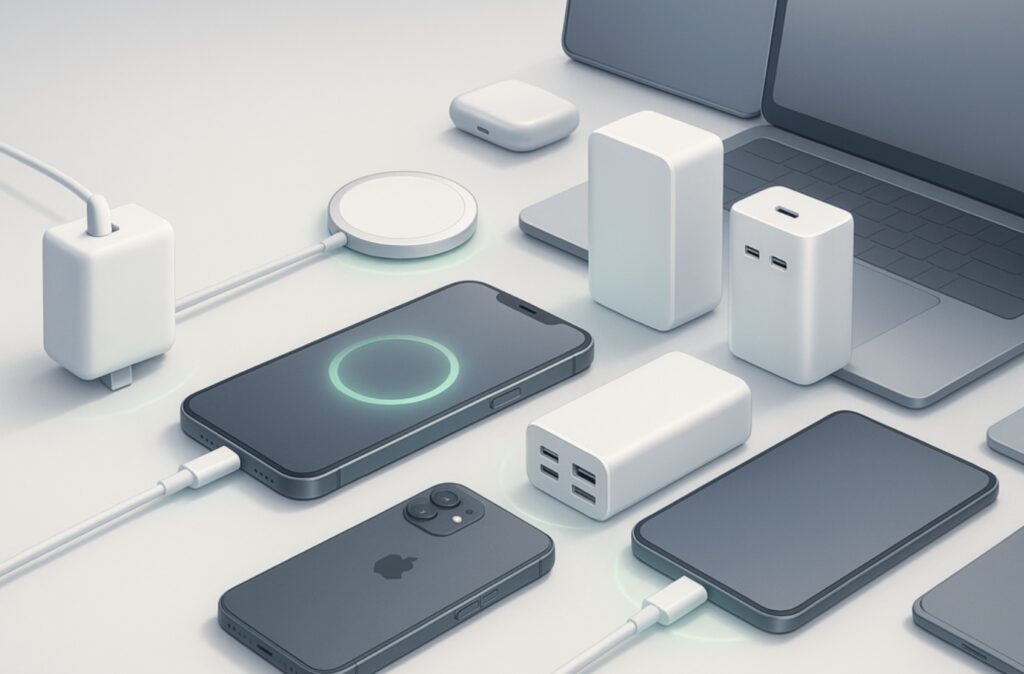
In today’s digital lifestyle, one charger is no longer enough. Between laptops, smartphones, tablets, and wireless accessories, we depend on a variety of power-hungry devices that need reliable and efficient charging. The most versatile solution is a combination of a USB-C PD charger and a portable charger.
Together, they provide the speed and flexibility required for modern users: the USB-C charger delivers powerful, fast charging at home or at the office, while the portable charger ensures your devices stay powered when outlets are unavailable. This article explains how to choose the best USB-C and portable charger combo, covering performance, compatibility, efficiency, and long-term battery safety.
- Why You Need Both a USB-C Charger and a Portable Charger
Devices today are designed for high-speed power delivery. Smartphones often support 20W or more, while laptops can demand over 65W. Using outdated chargers can lead to slower charging times or overheating.
A usb-c pd charger paired with a portable charger with usb-c output creates a balanced setup:
- A wall charger for rapid power delivery to laptops or tablets.
- A portable power bank for topping up your phone, earbuds, or smartwatch during travel.
This combination means you no longer rely on a single outlet. You get fast power when stationary and steady backup when mobile.
- Understanding USB-C Charging Technology
The Advantages of USB-C
The USB-C connector has become the universal charging standard for modern electronics. Its benefits include:
- High power capability: Supports up to 240W under USB Power Delivery (PD 3.1).
- Universal compatibility: Works with laptops, tablets, and smartphones.
- Reversible and compact design: Simplifies use and reduces cable clutter.
- Bidirectional charging: Some devices can both draw and supply power through the same port.
Fast-Charging Standards to Know
When selecting a usb-c charger, you should understand the main charging protocols:
- PD 3.0 / 3.1 (Power Delivery): Enables flexible voltage and current control up to 240W.
- PPS (Programmable Power Supply): Adjusts output dynamically to reduce heat and improve efficiency.
- Quick Charge 4+ / 5.0: Maintains compatibility with older non-PD devices.
Choosing the Right Power Range
- Phones and tablets: 30–45W USB-C PD charger.
- Laptops: 65–100W or higher.
- Multiple devices: A 100W charger with dual USB-C ports for flexibility.
Always check that your charger and cable support both PD and PPS for maximum compatibility and efficiency.
- What Makes a Good Portable Charger
A portable charger—or power bank—is no longer a basic backup. With USB-C fast charging and PD support, it can charge laptops, tablets, and multiple devices simultaneously.
Key Specifications
| Specification | Recommended Range | Why It Matters |
| Capacity | 10,000–20,000 mAh | Enough for a full day of recharges |
| Output Power | 20–65W | Supports fast charging for multiple devices |
| Ports | At least 2 (USB-C + USB-A) | Flexible and convenient |
| Input Port | USB-C PD | Faster recharging for the power bank itself |
| Weight | Under 400 g | Easy to carry daily or during travel |
Useful Features
- Pass-through charging: Charges your device and recharges the power bank simultaneously.
- Smart current detection: Adapts output to protect smaller gadgets.
- LED indicators: Clearly display remaining capacity.
Common Issues and Solutions
- Slow laptop charging: choose a power bank with at least 45W PD output.
- Too bulky: opt for slim, GaN-based models.
- Compatibility issues: ensure it includes USB-C in/out ports with Power Delivery support.
- Matching USB-C and Portable Chargers for Different Scenarios
Home or Office Use
At home, a usb-c wall charger (65–100W) is ideal for laptops, tablets, and other high-demand devices. Keep a portable charger nearby for smaller devices or when an outlet is inconvenient.
Business and Travel
For frequent travelers, a multi-port usb-c pd charger allows you to charge multiple devices in a hotel or airport. A portable charger with usb-c output keeps your devices powered on long flights or during commutes.
Outdoor and On-the-Go Scenarios
When away from outlets, a compact portable charger ensures uninterrupted connectivity for phones and headphones. Once back at the hotel, recharge everything quickly with a high-power usb-c fast charger.
Power Matching by Device Type
| Device | Recommended Charger | Power Range |
| Smartphone | USB-C fast charger + portable charger | 30–45W |
| Tablet | USB-C PD charger | 45–65W |
| Laptop | USB-C charger with PD 3.1 | 65–100W+ |
| Earbuds / Smartwatch | Portable charger | 5–10W |
Balancing wattage ensures you don’t overheat batteries or waste charging time.
- Optimizing Charging Efficiency and Battery Safety
Improving Charging Performance
- Use PD 3.0 or PPS-certified cables to minimize resistance and energy loss.
- Avoid using your device during charging; heat buildup reduces efficiency.
- Clean USB-C ports regularly to ensure stable contact.
Extending Battery Health
- Keep your battery between 20% and 80% whenever possible.
- Recharge your portable charger every two to three months if unused.
- Avoid charging devices in high-temperature environments.
Safety Certifications and Protection Features
- Look for over-voltage, overheat, and short-circuit protection.
- Ensure your usb-c charger and portable charger carry CE, FCC, or RoHS certification.
- Smart safety chips help regulate current and prevent overcharging.
- Buying Guide: What to Check Before You Buy
Five Key Criteria
- Power capacity: Match the charger’s maximum output to your most demanding device.
- Protocol support: Ensure PD and PPS compatibility for fast and safe charging.
- Port configuration: At least one USB-C output plus an additional port.
- Thermal design: Look for ventilation or GaN technology for better cooling.
- Safety certification: Choose certified models for long-term reliability.
Common Mistakes
- Multi-port chargers that cannot deliver full advertised power across all outputs.
- Power banks that only use USB-A ports.
- Ignoring input power — low input can make recharging the power bank take 8–10 hours.
Simple Decision Process
- Identify your power needs by device type.
- Verify compatibility with PD and PPS.
- Choose a lightweight, travel-friendly design.
- Confirm certification and protection features.
- The Future of USB-C and Portable Charging
The gap between usb-c chargers and portable chargers is closing fast. Several technological trends are redefining how we power our devices.
- Bidirectional charging: Power banks that both charge devices and recharge themselves faster.
- GaN (Gallium Nitride) technology: Enables smaller, cooler, and more efficient chargers.
- Intelligent power distribution: Devices will automatically balance power delivery among connected devices.
- Sustainability: Solar-compatible portable chargers and recyclable materials are becoming mainstream.
As technology advances, expect all-in-one charging solutions where a single compact hub can power every device you own.
- Conclusion: A Smarter Way to Stay Powered
No single charger fits every need, but combining a USB-C charger and a portable charger gives you the flexibility to handle every situation.
- The USB-C charger offers the speed, power, and efficiency for laptops and larger devices.
- The portable charger ensures uninterrupted power during travel or emergencies.
Together, they create a practical, future-ready setup that delivers reliable, efficient, and safe charging anytime, anywhere.
Investing in the right usb-c and portable charger combo is not just about convenience — it’s about building a power ecosystem that supports your mobile, connected lifestyle.